Orson’s Zagreb
A HIDDEN STORY BEHIND ONE OF CINEMA’S BOLDEST FILMS
Among the many unexpected encounters between Hollywood and this corner of Europe, none is quite as captivating as the story of Orson Welles—a visionary whose name is universally known, yet whose bond with Zagreb remains one of cinema’s most intriguing, lesser-told chapters.
Most audiences know Welles as the brilliant mind—and unmistakable force—behind Citizen Kane. Far fewer know how deeply he became intertwined with our capital. For Zagreb is not just a location in his career; it is a city that stirred his imagination, challenged his eye, and ultimately shaped one of his most daring films.
To understand what drew Welles here, we return to Zagreb of the late 1950s and early 1960s—an era when the city pulsed with artistic energy. Its graceful Austro-Hungarian façades, ambitious modernist buildings, and the renowned Jadran Film Studio created a creative ecosystem unlike any other in the region. International directors, actors, and entire film crews flowed through the city, drawn by both its irresistible visual character and its vibrant, affordable production scene. Zagreb had become a crossroads of cinematic ambition—and Welles arrived right in the middle of that golden age.
His introduction to Croatia came at the end of the 1950s, when he arrived to act in The Battle of Austerlitz, directed by Abel Gance. As he stepped into his role as the inventor Robert Fulton, he also stepped into the streets and squares of Zagreb, absorbing the city’s contrasts and textures. He couldn’t have known then that this first encounter would spark one of the most significant artistic decisions of his career.
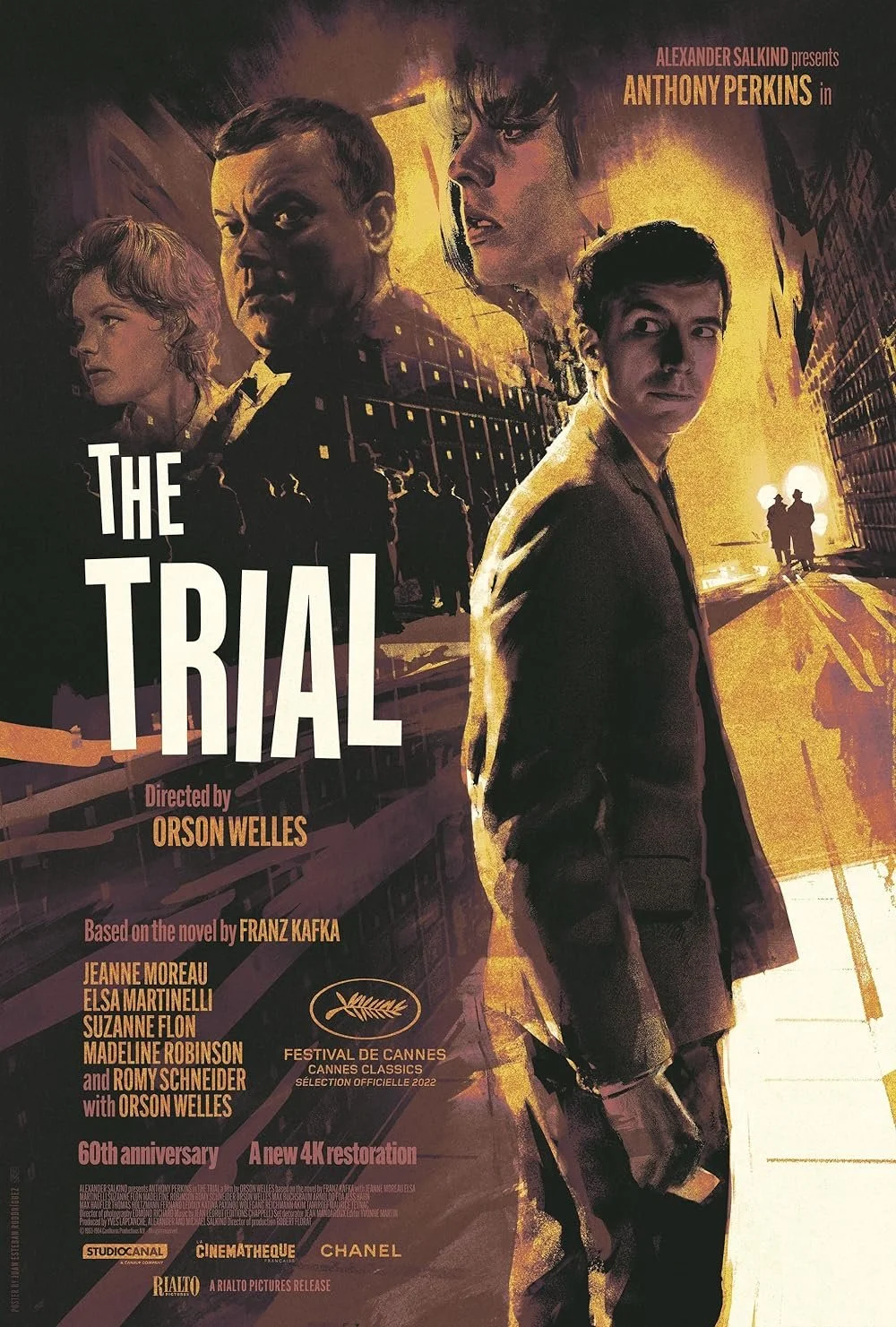
Two years later, Welles accepted the challenge of adapting Franz Kafka’s The Trial. He needed a setting capable of capturing Kafka’s unsettling world—its strange mixture of modern alienation, oppressive bureaucracy, and unsettling beauty. Zagreb provided exactly that. He wandered through the Lower Town’s grand 19th-century boulevards and paused in front of landmarks such as the Cathedral and the Croatian National Theatre. Then he turned to the future: the striking new Public Open University on Vukovarska Street, completed in 1961, whose stark lines and modernist clarity offered a perfect visual counterpart to Kafka’s atmosphere of disorientation.
But Welles’ boldest undertaking happened indoors. Inside the Zagreb Fair, he ordered the construction of a monumental set: an office filled with 850 desks and 850 typists, all working at once. The result was a breathtaking cinematic sequence—an unforgettable, rhythmic portrait of bureaucratic machinery made almost surreal by its scale. It remains one of the most ambitious film sets ever built in this region. Reflecting on Kafka’s universe, Welles once described it as “a combination of an unimaginably sterile future and an incredibly dusty accumulation of tradition”—a paradox he felt Zagreb embodied with remarkable authenticity.
Although Zagreb is the heart of this story, Welles’ Croatian journey did extend further south. In 1967 he travelled to Hvar to film The Deep, an unfinished drama starring Jeanne Moreau and Croatian artist Oja Kodar, and some scenes were later filmed in Split, a city Welles returned to many times. Oja Kodar—born in Zagreb—would become his muse and close companion, adding an intimate personal thread connecting Welles to this part of the world.
And yet, of all the places that shaped his late career, it is Zagreb that remains most deeply imprinted in his cinematic legacy—a city that offered him not only a backdrop, but a world in which his imagination could roam freely, reshaping Kafka’s vision through the lens of its architecture, its spirit, and its unique, quietly magnetic character.
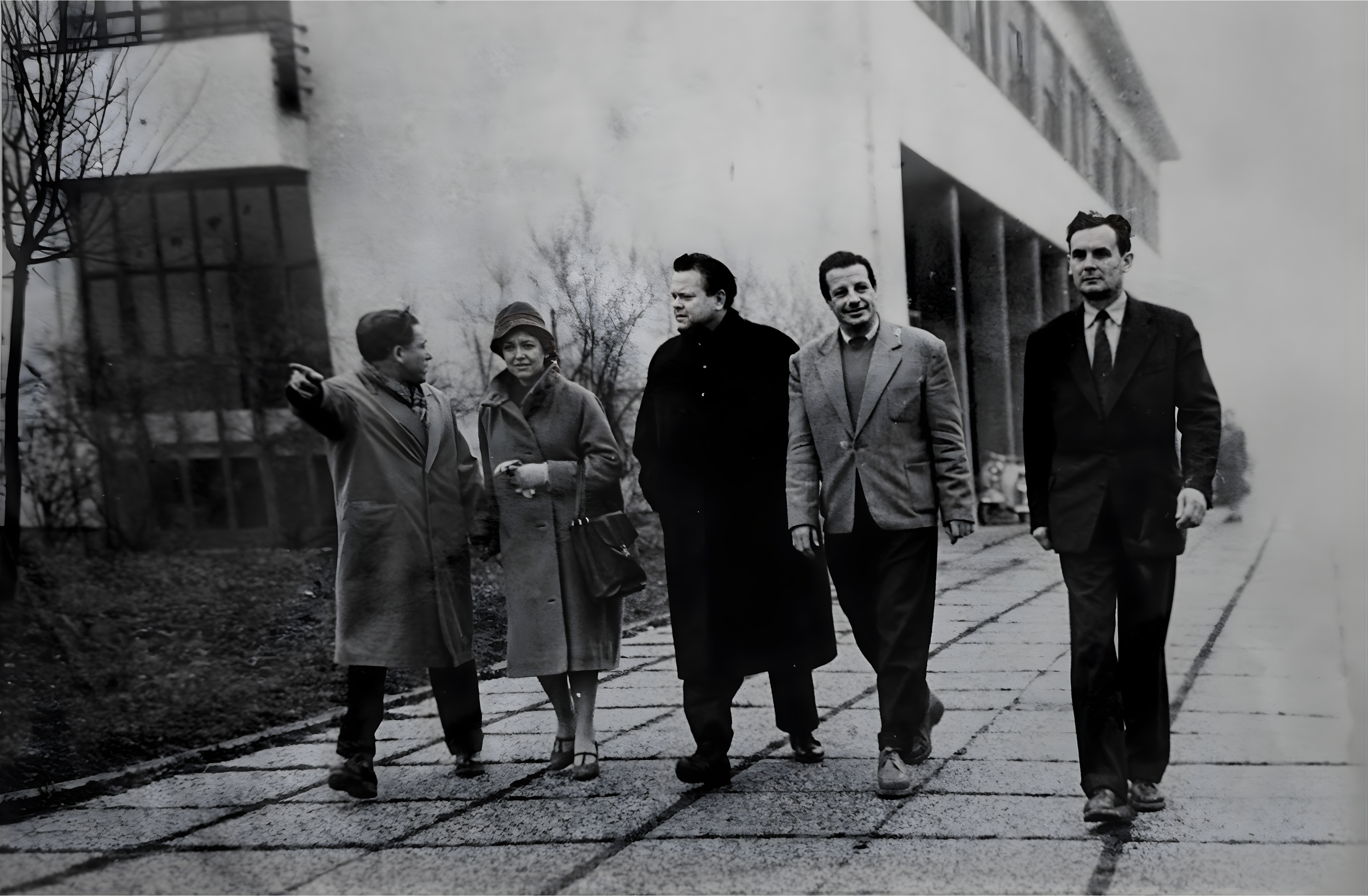
Orson Welles outside Jadran Film Studio, Zagreb, 1961
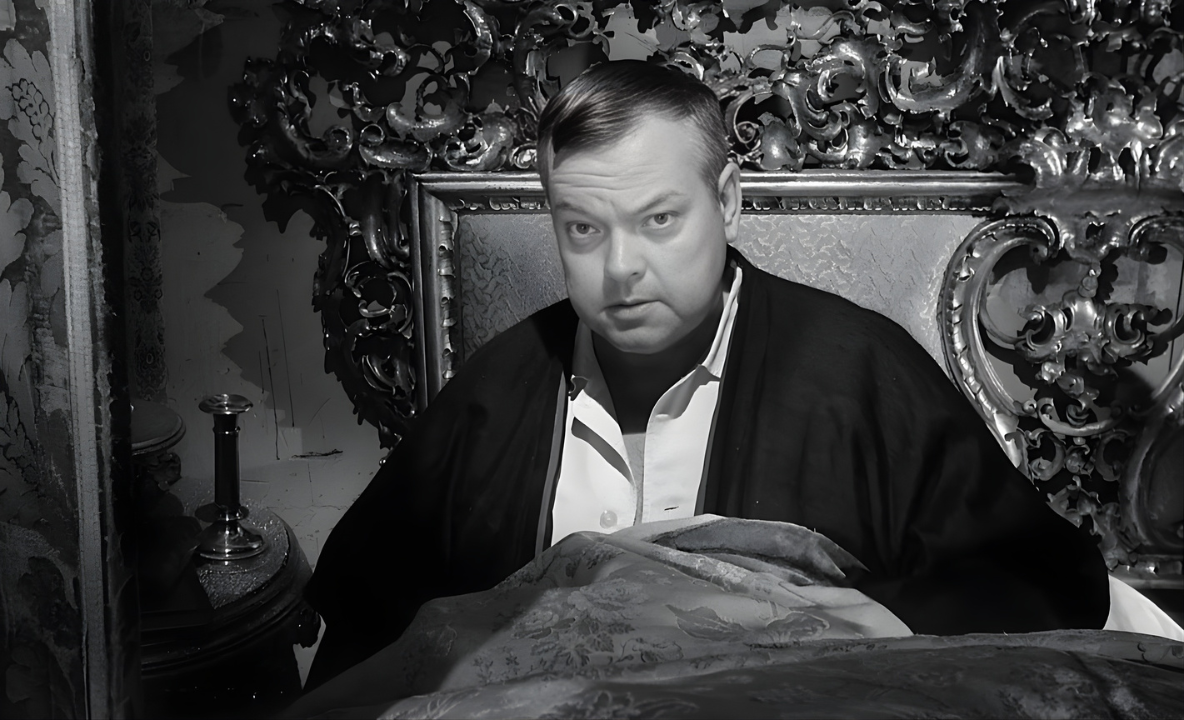
Orson Welles in his iconic Zagreb production, The Trial
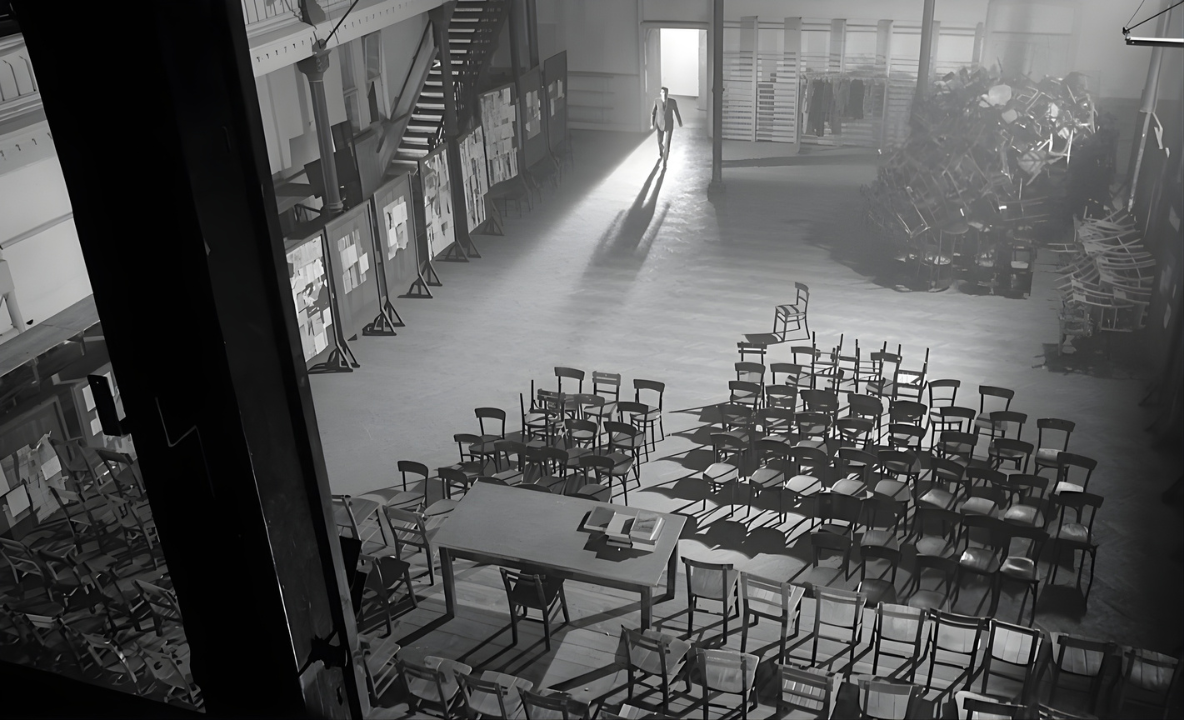
The Orson Welles Studio in The Trial